

South Africa – 50th Anniversary of the June 16 Uprising…
A new struggle is necessary – for the overthrow of capitalism and a socialist society.
Marxist Workers Party (Committee for a Workers’ International in South Africa)
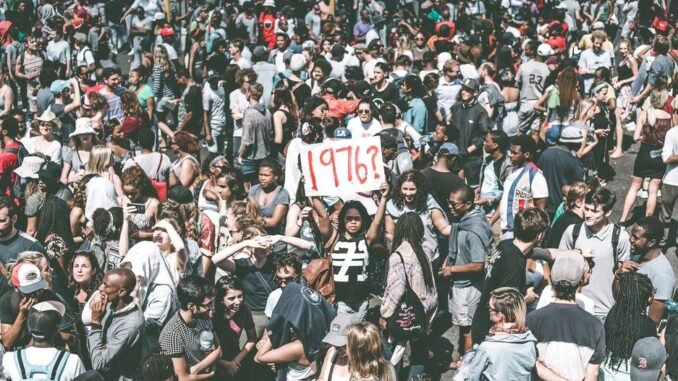
The Marxist Workers Party marks the 50th anniversary of the heroic uprising of working class youth with the publication of a platform and programme of action. The aim is to re-unite the youth, rekindle the revolutionary fire that animated the class of ’76, and reinforced the confidence that the apartheid regime was not invincible. Standing on the shoulders of the organised working class that had broken the regime’s aura of omnipotence in the 1973 Durban strikes, the youth raised the self-confidence of the entire black majority.
They inspired first the defeat, by the United Democratic Front, of the regime’s Tricameral Parliament toy telephone aimed at splitting the Coloured and Indian oppressed from their African class brothers and sisters. The graduates of 1976, now in the workplace, were to the fore in the1984-6 working class uprising commencing with the September 1984 Transvaal 2-day regional general strike. The fearlessness of the class of ’76 in turn inspired the December 1985 launch of the Congress of SA Trade Unions in the middle of the first partial state of emergency.
The confluence of these three tributaries into a mighty river broke the back of white minority rule, ensured the defeat of apartheid and enabled the black majority to break the yoke of national oppression, to stand tall, heads unbowed. This victory earned the black working class the admiration of the oppressed and exploited worldwide.
Fifty years later, as the analysis in our programme of action and platform shows, none of the essential ideals the youth fought for have been achieved. Instead, the youth and working class are confronted by forces, in and outside government but interconnected with each other, determined to trample on the noble traditions of unity, domestic and international African and worldwide solidarity.
Today led by formations and political leaders, whose elevation into office would not have been possible without the sacrifices of the youth of 76, alongside the workers, political and women’s movement, confront the youth with a new challenge much more evident in its class character than it was under apartheid – capitalism. They face a new reactionary right wing campaign of divide-and-rule through xenophobia and its blood relatives, tribalism, racism and misogyny.
The xenophobes use, without any sense of shame, as their point of reference US president Trump, elected to office despite several charges of corruption and a sexual assault conviction. A ceaseless torrent of abuse flows out of his mouth like a broken sewage depicting South African blacks as barbaric and committing a genocide against white farmers; Africa as the home to “sh..t hole” countries, Haitians as consumers of pets, Mexicans as rapists and killers and immigrants as people released from mental asylums.
The coalition of reaction which includes March on March, Operation Dudula, ActionSA, MKP, the Patriotic Alliance, the IFP and other formations, use the same inflammatory far right rhetoric soaked in falsehoods from Trump’s Make America Great Again followers. They parrot mindlessly false claims that foreigners strain public services including schools and hospitals, steal jobs and spaza shop opportunities. At the highest levels of government starting with president Ramaphosa himself, who like his predecessor in connection with the arms deal, is under a cloud of suspicion of corruption over Phala Phala, is posturing hypocritically over maintaining “law and order” and prosecuting “illegality.” We cite but 2 examples. The state has manufactured “illegality” through savage cuts in social spending. To finance the debt – 22c of every Rand of the budget is spent on interest alone. This resulted from reducing corporate tax from 52% in 1994 to 27% today and borrowing at the rate of over R2bn per day from the mashonisa on the domestic and financial markets. This is the reason behind savage social spending cuts across the board. It has left the Department of Home Affairs understaffed and refugee asylum application centres reduced. This leaves both asylum seekers undocumented, and 450 00 SA children without birth certificates or IDs – rendered stateless in their country of birth, unable to enrol at school or register for matric exams.
Xenophobe leaders yearn for flesh pots of apartheid – danger of racial and ethnic conflict
In a manner as dangerous as the role of the media in stoking the Rwanda genocide, the media in SA is providing saturation coverage to these xenophobic forces’ propaganda. Inevitably, tribalism has reared its head. Anyone with a dark skin, “unfamiliar” features and speaking a language unfamiliar to the xenophobes are a potential victim of apartheid style racial classification. A Xitsonga speaker has already been killed, alongside several Mozambicans. Of the 63 killed in the 2008 xenophobic pogroms 21 were South African.
- The Economic Freedom Fighters in Limpopo have protested jobs discrimination against Sepedi speakers in favour of TshiVenda speakers in the province.
- The Free State witnessed a shut down in May of Botshabelo and Thaba Nchu over employment of “outsiders” including Xhosa-speakers.
- A North West small business development representative complained on SAFM that too many artisans from outside the province are being employed in positions that should be reserved for Batswana.
- Coloured National Congress MP, Fadiel Adams says that he does not normally agree with the DA’s Helen Zille, but she is correct that Black people from the Eastern Cape inmigrating to the Western Cape are refugees and must go back.
- A member of the Zulu royal family, in the spirit of Zuma’s “surprise at hearing Sesotho spoken in KZN,” has called for Natal to be dropped from the province’s name.
- A British immigrant has appealed to Trump for support in his big business funded campaign, Capexit, for the secession of the province as white dominated, independent racist laager.
The organisation calling itself “Re Basotho Kaofela” uniting Lesotho and SA nationals in the Free State has warned March on March of resistance in the province. A group of black SA small business people in Marabastad, Tshwane, has issued them a similar warning. With organisations like the IFP, its hands soaked in the blood of apartheid funded and armed “Black-on-Black” violence, in this coalition, fears of a repeat of the 2008 pogroms or the July 2021 riots that claimed over 350 lives and cost 150 00 jobs, are legitimate.
The xenophobes are pursuing their ambition to get into government for self-enrichment. Their campaign serves the interests of the ANC-led GNU and the capitalist class: to divert attention from their culpability for their crimes against the working class: mass unemployment, poverty and inequality. It is not migrants who cause job losses, service delivery collapse and industrial scale Zondo and Madlanga Commission-style corruption. The responsibility lies with a government that fails to fill over 100 000 public service vacancies, the boose who are failing to invest and have led 32% of SA industrial capacity idle leaving a potential 8m jobs vacant. Instead, they loot and pillage R400bn per annum according to Judge Dennis Davies in his report to SARS who appointed him to investigate this theft euphemistically called “illicit capital flows.” Judge Davies reported that the 2000 multinationals operating in SA are responsible for the loss – over R1bn a day. Since 1995 SA has lost over R1,3 trillion in capital flight after the ANC government opened the borders for capital to flow in out of the country at will. Wealthy foreign nationals property purchases in Cape Town have raised house prices even further beyond the reach of working and even middle class residents aggravating a national housing backlog of hundreds of thousands.
Commemorations of June 1976 have been reduced to a meaningless and demeaning spectacle aimed at stripping it of its revolutionary inspiration and the lessons it is pregnant with for today’s youth. The youth must learn the lessons of 1976. With their fearlessness and elan they fired up the entire working class in the struggle against apartheid. In the ideological cross pollination with the organised working class, they drew the conclusion that the struggle to overthrow apartheid would not be completed without passing on without interruption to the overthrow of capitalism. Unfortunately, the struggle towards a socialist SA was derailed and steered it into a harbour safe for capitalism -a constitutional bourgeois democracy that protects the economic dictatorship of the capitalist class.
The youth must retie the historical knot with the class of ’76, and this time drive the movement – the organised working class in the trade unions in particular toward the overthrow of capitalism and the socialist transformation of society.