

Trial of Makoko protesters – We Remain Undaunted
We Risk Jail Term for Daring to Stop State-Backed Theft of Poor People’s Land but We Remain Undaunted.
On Friday, 24 April 2026, it would be the third time that I and Dele Frank (Arole Fela) would be appearing in court to stand trial on criminal charges.
By H.T Soweto
We are being tried on a five-count charge bordering on conduct likely to cause breach of public peace amongst others. If found guilty, we both are looking at a few years behind bars. But we remain undaunted.
This is because the only reason why we are being subjected to this sham trial is our role in a peaceful protest on January 28 2026 which successfully stopped the Lagos state government from forcibly evicting poor people from their ancestral lands in Makoko in order to make way for the rich and powerful elite.
A Protest that Stopped the Bulldozers
The sham trial, which started on Thursday 29 January 2026 following our arrest on January 28, is the clearest indication yet of how much the anti-eviction protest successfully pushed back the Lagos state government and the bevy of land grabbers in their agenda to wipe off the people of Makoko from the face of the earth.
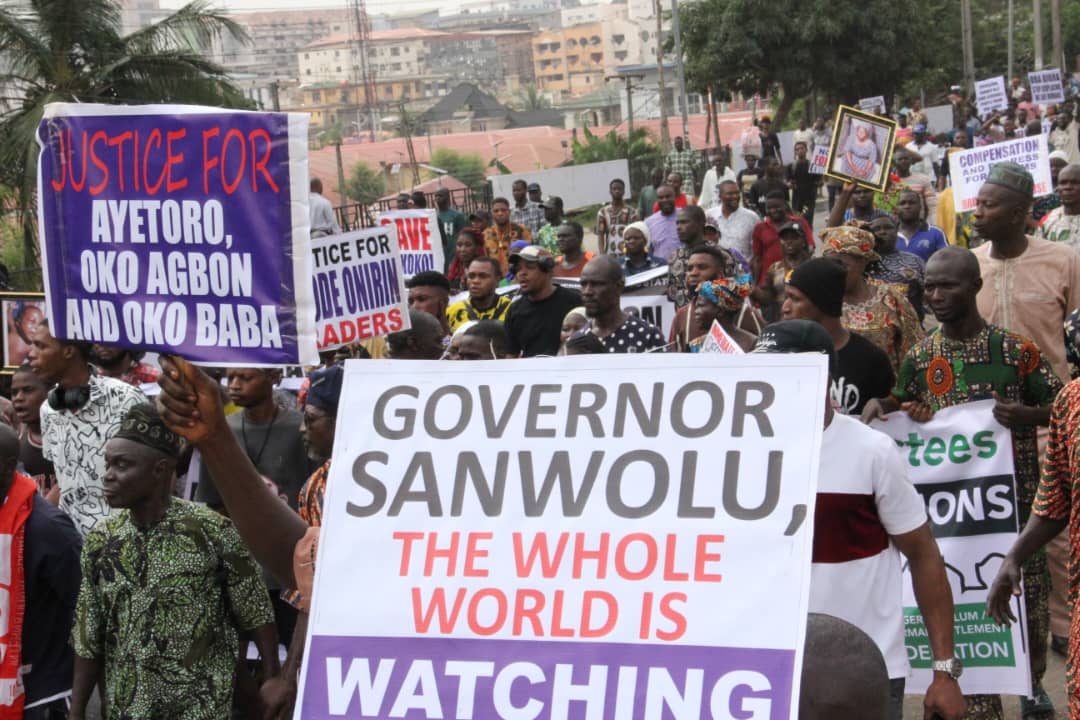
On Thursday 28 January 2026, over 5000 residents of Makoko, Sogunro, Iwaya, Oko Agbon, Otumara, Oworonshoki, Ajegunle and Owode Onirin marched to the Lagos state House of Assembly. The peaceful march was organized by the Coalition Against Demolition, Landgrabbing and Forced Evictions in Lagos state which members of the Democratic Socialist Movement (DSM) and the #EndBadGovernance Movement Lagos state helped set up in January as news of a renewed push to demolish and evict residents of Makoko filtered in.
Makoko is a waterfront community in Lagos state that has been in existence for more than a hundred years. The traditional occupation of the Makoko people, numbering over 300, 000, is fishing. Indeed, Makoko is widely celebrated as the “Venice of Africa” due to its iconic wooden homes, schools, and churches perched on stilts over the Lagos Lagoon. It is Africa’s example of how indigenous communities successfully live and interact with nature.
However, instead of supporting this highly resourceful community with public infrastructures like pipe borne water and sanitation, the priority of the Lagos state government has always been to try to evict them in order to redevelop the community into a luxurious estate for the rich. The people of Makoko have historically resisted this agenda politically and legally. Indeed, there is a litany of court orders and judgements in favour of the Makoko people from the year 2012 till now – none of which the Lagos state government has respected
On December 23 last year, using public safety as an excuse, the Lagos state government sent in marsh buggies (amphibious bulldozers) into Makoko and so began a demolition that nearly wiped off the entire community. Residents described waking up on that day to a low metallic rumble as the amphibious monsters crawled over the lagoon to begin pulling down one wooden house after another. Because the demolition started around the yuletide, it was weeks before it became public knowledge by which time at least 10, 000 residents had lost their homes. In the days that followed, heart wrenching scenes of homeless residents including pregnant women and babies living inside canoes floating on the lagoon filled social media further adding to the outrage.
The state government also sent in trigger happy policemen to crush any resistance. The method the police employed was especially brutal as it involved firing tear gas indiscriminately into closely-built wooden homes without advance warning. Many only survived by plunging into the lagoon. After a few days, 12 Makoko residents lay dead due to tear gas inhalation. This includes a 70- year-old widow, Ms. Albertine Ojadikluno and two infants, Morenikeji Olasupo and Epiphany Kpenassou Adingban.

The protest of January 28 carried all the rage of the losses and pain of Makoko people at the hands of the police. Yet protesters were peaceful and orderly despite frequent provocation by the police who had refused to accept a notification letter for the protest the day before and only grudgingly allowed the march to kick off because of the threat of lawsuit by a prominent lawyer supporting the movement. However, as the march got to the Lagos State House of Assembly, heavily armed policemen led by the former commissioner, Jimoh Olohundare Moshood, barricaded the entrance and asked protesters to turn back. This led to altercations followed by firing of teargas. By the time the smoke cleared, several protesters were injured at least two whom had to be hospitalized.
Myself and Dele Frank were subsequently arrested. Upon my arrest and while in police custody, I was subjected to a cruel beating, brutalization and torture which has now left me with a debilitating spinal injury that I continue to nurse almost three months after the incident.
But so successful was the protest and so severe was the backlash that followed its violent dispersal that the next few days saw the Lagos state government scrambling to regain the initiative and placate the people. Hence on 3rd February 2026, the Lagos State House of Assembly announced the suspension of demolition in Makoko. The assembly, which had ignored previous entreaties by the community to intervene in the situation, also agreed to meet with their representatives to discuss a solution.
Stalemate
Since then, a condition of stalemate has been established in the situation. For instance, while it continues to insist that the Makoko people could not be allowed to remain where they have called home for a century, the state lacks the confidence to move in bulldozers and the police as it did in December last year due to fear of another round of protest.
Indeed, on 11 March 2026, the Lagos State House of Assembly, after its so-called consultation with the community, recommended the relocation of Makoko 60 kilometers away to Agbowa in the inland area of Epe Local Government Area. This was swiftly rejected by the people who said at no point did they ask to be relocated during their engagement with the House of Assembly. But to enforce this recommendation has become a tough choice for the Lagos State Government because of the memory of January 28.
Unable to employ outright force, the Lagos state government has instead been relying on its agents, comprising one Tomori, a notorious landgrabber, and the Oloto family, to sow division and intimidate some traditional chiefs in the community to support the government plan of relocation. But the community has remained firm even as they continued to mobilize against this subterfuge through public meetings, press conferences and rallies.
Saving Makoko
The struggle against the anti-poor agenda to demolish Makoko has been on for decades and has passed through several phases. The struggle itself borders on a corrupt and neo-colonial capitalist elite which respects neither heritage nor people’s welfare in its rapacious agenda to steal and rob. It shows how the capitalist elite do not care about any ethics or values. Their singular interest is the profit they hope to make from capturing prime estate on the waterfront and building shiny condominiums, malls, luxurious resort etc.
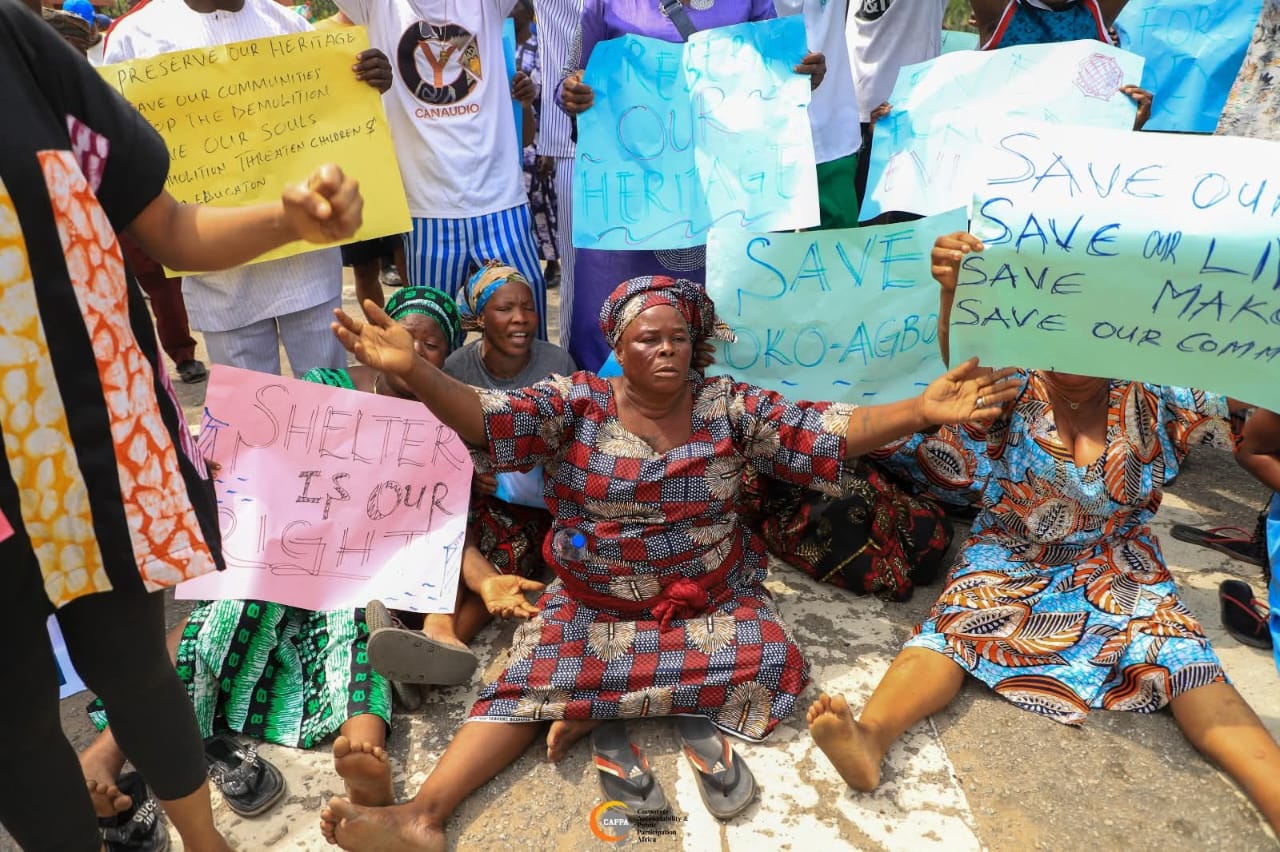
Otherwise, Makoko, an iconic water city, is one of Africa’s still-surviving cultural and architectural heritage that ought to be preserved. Being predominantly fisherfolks, Makoko people’s way of life is tied to the Lagoon so evicting them is equal to obliterating their history and existence as a people. In the early 19th century when the first generation of the residents got to the shore of the lagoon, the area that is now called Makoko was a stretch of marshland that no one could live in. It took decades of human activities including sand filling by the poor inhabitants for the land to rise around the shore to form what is now called Makoko and which the Lagos state government and the rich property developers now see as a prime estate worth grabbing. As a result, and quite rightly, Makoko people consider the plan to evict and replace them with the rich and powerful elite as a cruel injustice.
But after over a century of existence and in the absence of government support, it is worth noting that Makoko has also become a big urban slum with at least 300, 000 residents crammed into small space around and on the lagoon. Much of the housing units are wooden structures supported by stilts with transportation being mainly by wooden boats scurrying across the foul-smelling black-odorous waters. This has inevitably raised concerns around sanitation, waste disposal, public health and safety. Obviously, these are problems that cannot be ignored but they cannot be solved by forceful eviction. The 300, 000 Makoko residents are poor and therefore unable to afford to rent or own a house elsewhere in the city. In the context of a severe housing crisis in Lagos state wherein there is a shortage of at least 34 million housing units, evicting 300, 000 people in Makoko could lead to a major social and humanitarian crisis while compromising security and public safety.
The only sensible and humane way out is for a plan of development that can allow the Makoko to be developed and regenerated but with the original inhabitants not losing their homes, livelihood and way of life. Such a plan if combined with a public-funded programme to build affordable homes to plug the housing deficit across Lagos state can gradually reduce the numbers of people who are forced to live in slums like Makoko, Ajegunle and other communities because they have no choice. This is not something that is beyond the means of Lagos State – a city whose economy would be considered the fifth largest on the continent if it were a country on its own. It is only capitalism and greed and the profit interest of corrupt politicians and real estate developers that is making it impossible.
The UN is bankrolling Human Displacement in Nigeria
Indeed, it was the Makoko people themselves who proposed such a plan of development in 2020 after several years of resisting the agenda of the government to forcibly evict them. In 2020, they proposed a plan called the “Water City Project” that would allow the Lagos state government to modernize the area but without disrupting the livelihood and way of life of the inhabitants who would have guaranteed tenureship and therefore can continue to live in the area unless they voluntarily wish otherwise.
Soon after, the plan got the support of the United Nations which then decided to support the Lagos state government with about $8 million to implement the project. The project was meant to regenerate Makoko without forced eviction. But the demolition carried out from December 23rd 2025 until early this year before it was stopped by the January 28 protest had nothing in bearing with the original intent of the water city project. Rather the aim of the demolition was to wipe off the entire people of Makoko from the face of the earth so their land can be available to be grabbed by corrupt politicians and officials of the Lagos state government, real estate developers and the rich elite.
Interestingly, the United Nations agencies supporting the project (UN Habitat, UNDP etc.) have not publicly spoken against the actions of the Lagos state government despite it been a violation of several court orders/judgements and causing human displacement and enormous suffering. Neither is it on record that they have withdrawn support for the crudely perverted “water city project” of the Lagos state government despite the 12 precious lives lost in the process of the illegal demolition.
Epiphany Kpenassou Adingban, one of the two infants who died during the demolition in Makoko, was five days old when she choked from tear gas fumes fired by police men sent by the Lagos state government. The tragic irony of this is that a UN whose Secretary General, Antonio Guterres, regularly shed tears over the massacre and forced evictions being carried out by Israel in Gaza and the occupied territories is bankrolling something similar in Nigeria.
Next Steps
The January 28 protest is the only reason over 300, 000 Makoko residents still have a roof over their heads. The struggle is a brilliant example of what is possible when working class and poor communities come together to fight.
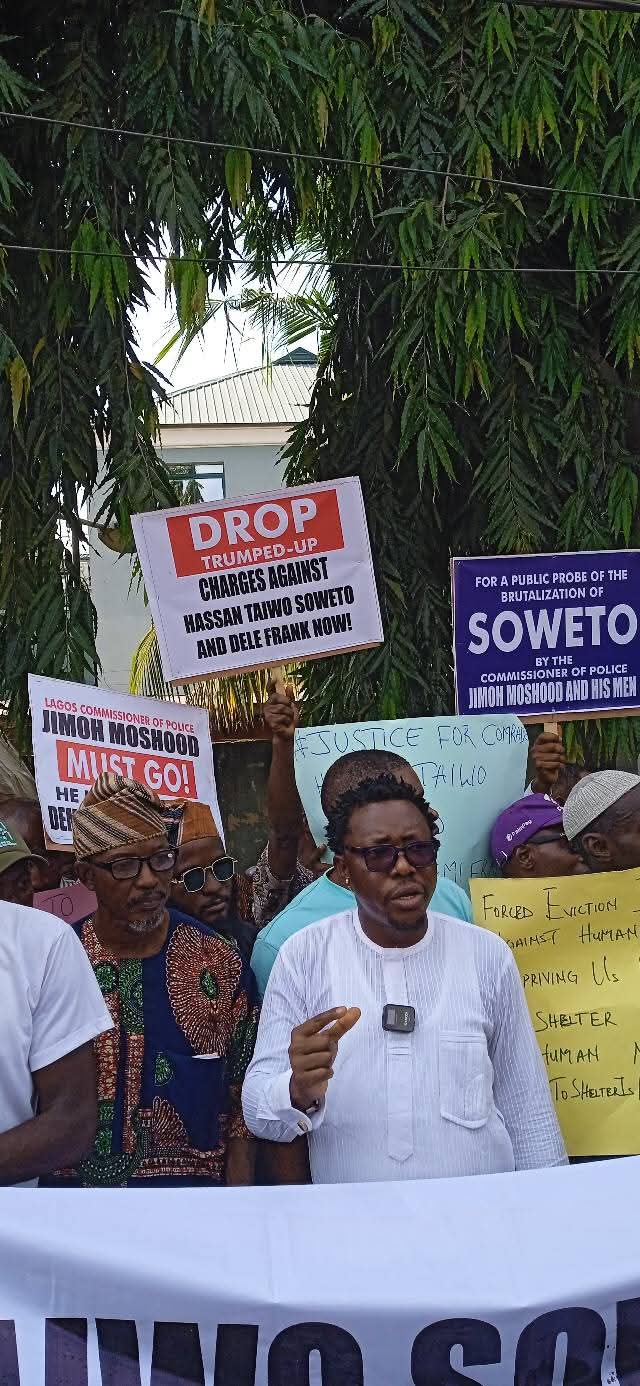
However, what has been won so far is only a minor concession compared to what needs to be done to ensure that the community is saved. But a real concession will only happen if the community continue to stick together and fight, with the support of left and civil society organizations and the labour movement. International solidarity would also be vital at this stage to rekindle the hope of the community and expose the role of the UN and other imperialist institutions in the tragic situation that they now face.
What all these again prove is the urgent need for a Socialist alternative. Naturally it should be deemed ridiculous if not insane that in the 21st century, the only way to carry out modernization and development is through forced eviction and human displacement. But right now, we live in an irrational capitalist society and such is the value that the system places on human life. The struggle to save Makoko will only fully win when we successfully rid Nigeria of capitalism and enthrone a workers and poor peoples government armed with a Socialist programme of development based on human needs and not profit.